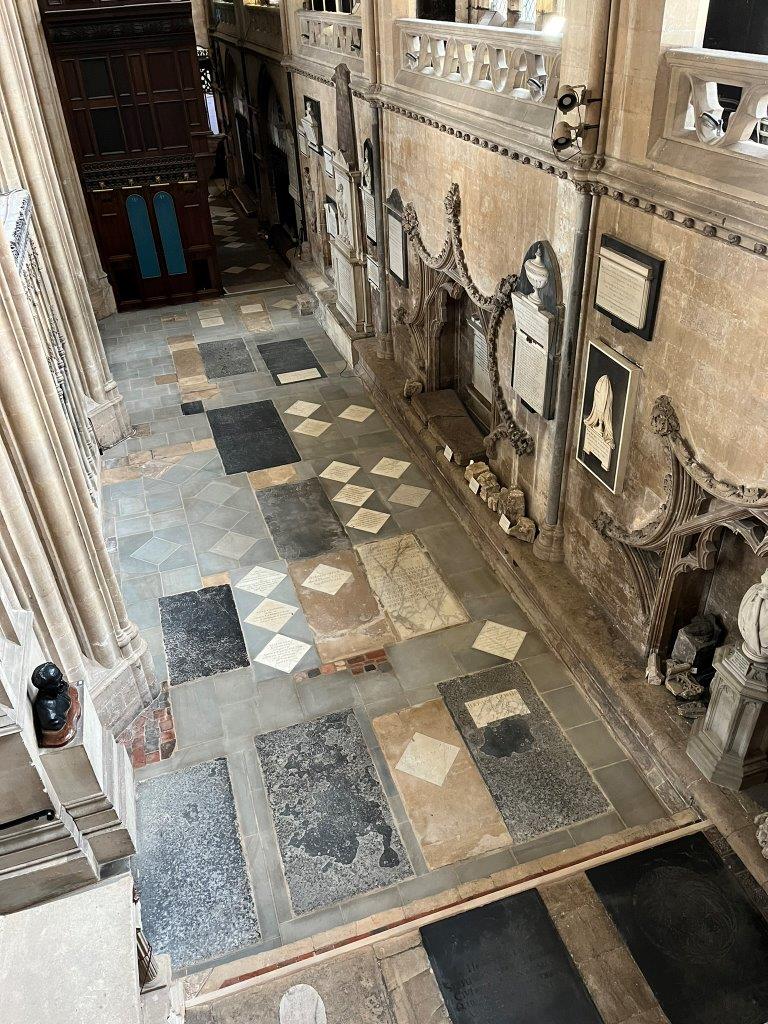
Bristol Cathedral’s recent restoration to the floor of the 14th-century Seafarers’ Chapel, led by Cliveden Conservation and Nick Cox Architects, has been recognised with a prestigious Church Transformation Award for exemplary craftsmanship and heritage conservation.
The restoration of the Seafarers’ Chapel floor at Bristol Cathedral has been awarded a Church Transformation Award by the Diocesan Advisory Committee (DAC). Undertaken by Cliveden Conservation in collaboration with Nick Cox Architects and Bristol Cathedral, the project will be recognised at the 2026 Church Transformation Awards Evening, 11 May 2026, at St James Church, Bristol.
Each year, the DAC recognises outstanding projects that display an exceptional standard of workmanship or have been key to a parish’s growth and mission. This year’s award celebrates the dedication, skill and vision that brought the restoration of the chapel floor to life.
Restoring the Chapel Floor
Restoration of the Seafarers’ Chapel floor was part of Bristol Cathedral’s project to improve accessibility and create a welcoming environment, with step-free access and a safer, more level floor. The chapel, which holds a variety of wall monuments and ledger stones paving the floor, was heavily worn and weathered.
Nick Cox Architects appointed Cliveden Conservation to undertake the major phase of stone repairs to the floor, together with the conservation and repair of the marble memorial tablets.
Conservation and Craftsmanship
The project required meticulous care throughout to retain the floor’s historic layout. The larger historic ledger slabs were retained in situ, while decayed and worn Pennant sandstone was carefully lifted and replaced with Forest of Dean Pennant sandstone from Barnhill Quarry to match the original material. Every stone was set out and cut to size with precision in line with the original floor layout.
During the dismantling phase, an archaeological watching brief was maintained. The lifting of the floor created an opportunity for the discreet installation of acoustic and audio cabling and revealed unrecorded subterranean burial vaults.
Marble memorial slabs were lifted and repaired, and a new stone ramp was installed to the east end, creating ease of access into the Lady Chapel. New steel and oak ramps were fabricated to reduce stepped access from the North Choir aisle and into the Choir.
Access for all
The chapel floor has been levelled, and the ramps create an inclusive, step-free environment. The Seafarers’ Chapel floor project is an outstanding example of the heritage craft skills needed to preserve and repair ecclesiastical buildings, ensuring that they remain accessible and welcoming places of worship for all.
Responses to the Award
Bristol Cathedral spokesperson:
“Transforming access in the Cathedral is a key priority for us as we work to ensure the Cathedral is open and welcoming to all. The seafarers’ floor was the first step – and we were really pleased with the result. Cliveden Conservation were a great team to work with – understanding the complexity of the context and working closely with Kathryn Harris and the team at Nick Cox Architects to deliver a fantastic end result”
Tom Flemons, Director and Cliveden Conservation Bath Workshop Manager, said:
“This project was a great opportunity to work with the Cathedral and Nick Cox Architects. It was a collaborative process with input from all involved, from the masons and conservators to the whole client team. A challenging process ensuring that the character of the floor was maintained whilst renewing well over one hundred individual stones, thanks and well done to all involved”
Kathryn Harris, Cathedral Architect, Nick Cox Architects
“This complex project required expert craftsmanship to sensitively level new stone slabs around existing monuments, which were conserved in situ. New ramps allow permanent access through the chapel, making the project an important step forward in the Cathedral’s vision to make this historic building accessible for everyone.”
