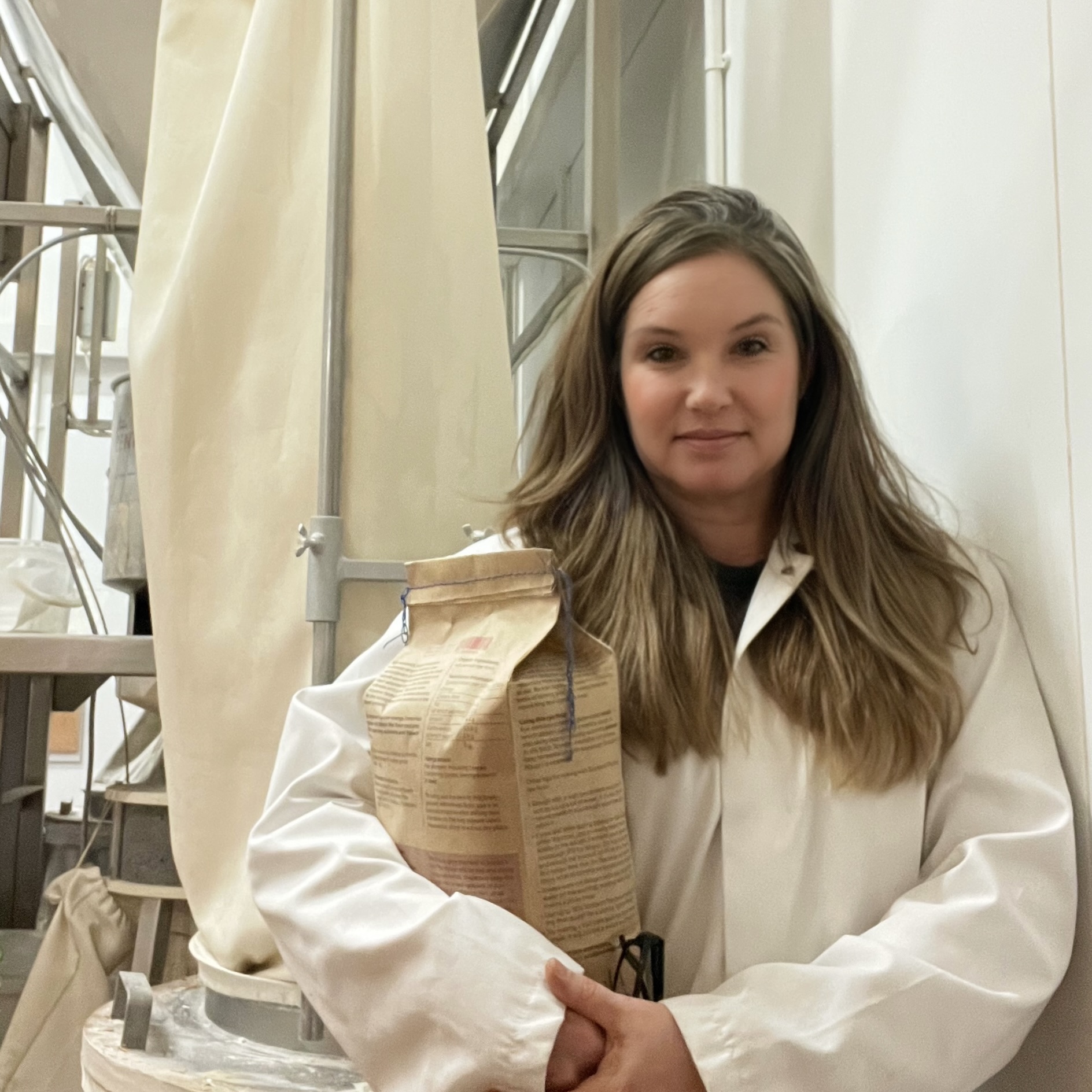
Written by Pamela Paquin
In the world of commodity crops, size matters. With margins decreasing, global competition increasing, subsidies (or their time horizon) becoming less clear, and input costs squeezing remaining profit margins, wheat farmers are increasingly securing on-farm value-added revenue streams. Vertical integration of both milling and baking can be a low-cost entry point to increase margins from wheat crops.
I was a New England livestock farmer from a dairy family. Arables were not my wheelhouse. Then COVID hit, and the Ukraine war. You could not find a bag of flour for the better part of a year, and when you did, it had increased in price at least threefold. Fortunately for us, our local baker was buying 50lb bags wholesale and selling them at cost to local families. It was a baptism by fire into the critical nature of wheat supply chains and “our daily bread”.
This disruption brought home to me just how fragile food and flour supply can be in times of crisis, a challenge now familiar to many UK producers as global shocks and tight markets affect grain prices, input costs, and household food security across Britain. The importance of localised, resilient supply chains and on-farm value adding has become increasingly urgent for UK agriculture.
Knowing I was moving to Scotland, I began visiting Scottish mills in 2023. This is when I met Andrew Whitley at Bowhouse on Balcaskie Estate. Settling in Falkland Fife this past autumn 2025, I’ve rolled up my sleeves and entered the front lines of UK food production at Scotland The Bread.
My goal is simple: to help farmers increase profitability so their soil remains productive in perpetuity.
To that end, I want to offer a selection of farms who’ve inhoused their flour production and added a bakery as well.
Examples
- Wheat Montana USA Website and PBS interview with founder
- Woodstock Farm Australia and interview
- Bruern Farm Cotswolds and Farmer’s Weekly Interview
- Walk Flour Mill website and interview
- Petite Peonies Cambridgeshire (milling as of this year). David’s evolving story can be found on his Instagram; his daughter has taken over milling, and he’s already selling out.
The good news for small-scale UK farmers entering this market is a low price point for machinery and certification. If you’re milling less than 500 tons per year of white flour, you are not required to fortify it, which is a point of contention among many customers seeking white flour producers without fortification. Wholemeal does not require fortification, as the germ is included and thus the required nutrient profile is met. Millers and bakers have a ready partner through vertical integration as we’ve seen in the examples listed above. Historical mills are often listed as not-for-profit and sometimes struggle with funding. Partnering with farmers and bakeries provides a mutual win.
Helpful Details
Grain is not fit for milling fresh off the field. After harvest, wheat must undergo several preparation steps to ensure flour quality. First, grain should be thoroughly cleaned to remove chaff, straw, and debris. Next, it needs to be dried to a safe moisture level, typically below 14.5 per cent, to prevent spoilage and ensure proper milling. Farmers can either purchase their own drying equipment or send grain to a local grain handler for drying services. There are small mobile dryers and cleaners available from companies like Agrex and Opico, allowing these steps to be handled on the farm. Once dried, grain should be stored in pest-proof, moisture-controlled containers until it is ready to be milled.
Small-scale commercial mills tend to cost between £5,000 and £10,000 new. For context, many small farm bakeries report annual gross revenue in the range of £20,000 to £40,000 just from direct flour and bread sales. On those figures, even a £10,000 investment in a mill could be paid off in two to three seasons, depending on your product mix and sales strategy. Running some numbers on volume and pricing will help each farm estimate their own payback period, but for many, the equipment pays for itself surprisingly quickly. A mill coupled with a bakery increases foot traffic, some mills may find supplying local bakeries in saturated markets a more profitable strategy.
Storage of grain for human consumption must remain under 14.5% and be secured in pest-proof containers. This includes being cleared by October 31st of open-sided storage. The AHDB guidance can be referred to for further information.
Finally, a commercial bakery can cost between £8,000 and £40,000 to set up. Margins for a bakery typically yield a 5-15% net profit, with gross margins reaching 60-70% for speciality products sold directly to consumers. For comparison, typical UK arable farm operations might expect net margins in the range of 1-3% for commodity wheat in an average year. When set side-by-side, the difference is clear: while cereal farming can leave little room for error or investment, an integrated bakery has the potential to multiply farm profitability with less exposure to volatile global market swings. This contrast highlights why many UK farmers are now exploring value-added baking as a route to greater financial resilience.
Summary
For most of us, finding a way to increase net profitability and ensure the next generation has a fair crack at inheriting viable rural businesses is achievement enough under the current conditions. My next piece will focus on a cost analysis in order to breakdown equipment required to scale up.
And when/if another breakdown of global supply chains occurs, our island will be able to ensure our daily bread. Because the farmland will be there, and the skill to turn commodities into food has percolated back down into the hands of the people.
Image credit: Pamela Paquin
We’re keen to feature more news and stories from our North UK Mills Group community on our webpage, and share even more information and insights beyond our regular meetings – so we’re asking for your submissions! Whether you have an idea for a one-off article highlighting a particular project you’ve been working on, or for a series of posts providing updates from your mill site across the year, we want to hear from you. Just get in touch via our submission form and we’ll get back to you as soon as possible.
