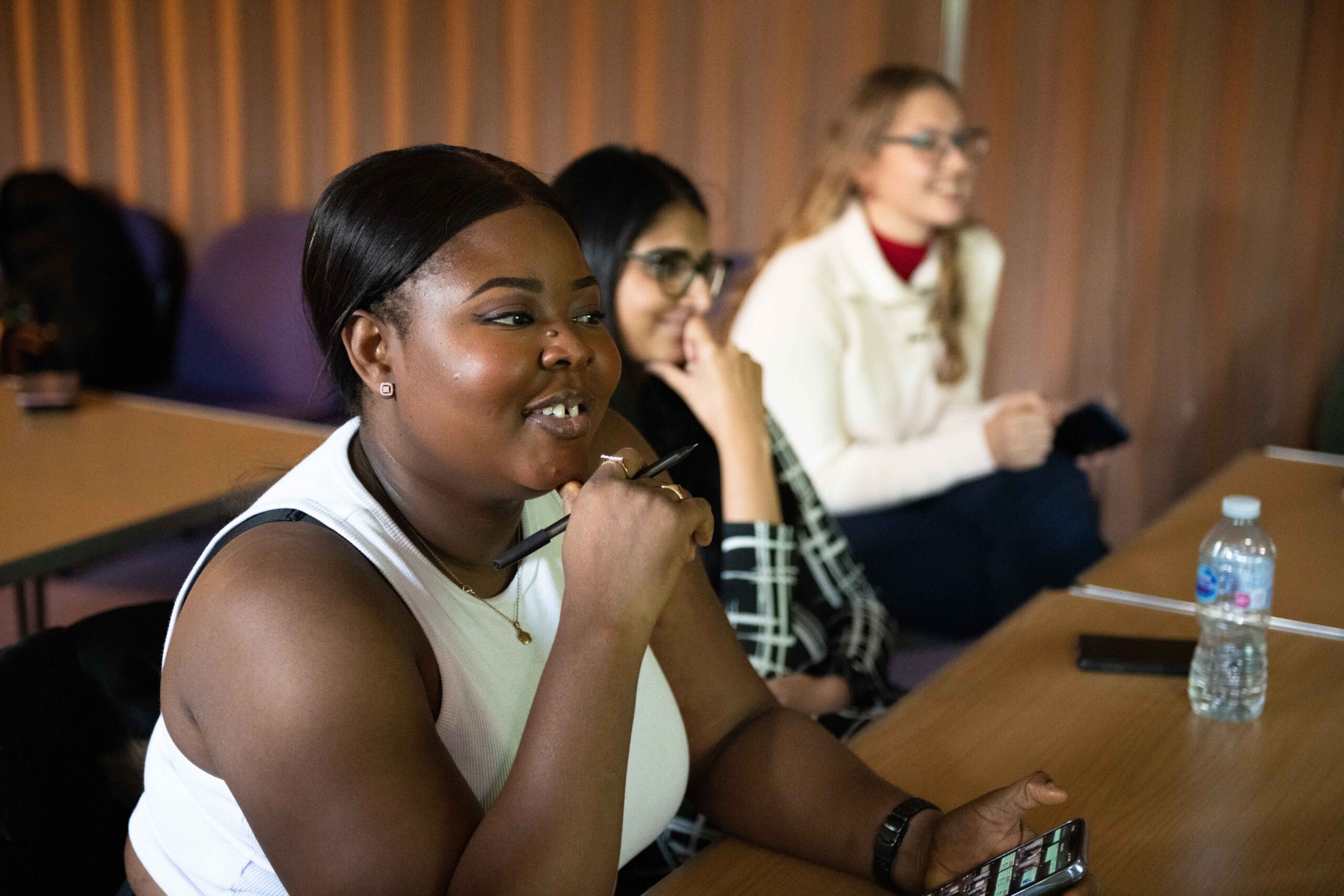
To help those aiming to get into the sector, Youth Forum member and current Steering Committee representative Ellie Hartfield [E] has recently conducted a group interview with established heritage professionals working at Rifles Berkshire and Wiltshire Museum. This discussion shares advice around the professional pathways into heritage, including insights from Bethany, a Managing Curator [B], Ross, Assistant Curator and Marketing Officer [R], and Tabitha, an Education and Outreach Officer [T]. Afterwards, Ellie reflects on the interview themes and findings, so do read on!
Interview Discussion:
How did you get into the Heritage Sector?
T: “I never planned to go into the heritage sector. Initially, when I was at University, I thought I was going to be a teacher. Realised they did a Masters in Cultural Heritage and Resource Management and thought that sounds interesting as I’ve always loved going to museums”
B:”I did History and English Literature at University with an aim of going into history. But when I left uni, I found that I needed a job straight away, so ended up in finance. I had the opportunity to leave work to bring up my children, then went back and did another BA Honours in archaeology, and then did the Masters course in Cultural Heritage and Resource Management. Then I got my first museum job, and started right at the bottom and slowly worked my way up”
R:”Well I never planned to work in museums, I kind’ve just fell into it. I did history at university, I never did any of the museum placements or heritage related stuff like that. I graduated in 2017, coming out of uni thinking I was going to be an academic, write some books and become a New York Times best seller. Then I spent a couple of years figuring out what I wanted to do, I got retail experience and worked in hospitality. Then Covid hit and I was out of work, so I did a bit of a reset over covid. Then there was an advert for this museum for front of house volunteers, and that’s how it started.”
What were your aspirations when you first got into the heritage sector, and what are your aspirations now?
T: “My aspirations were to get a job, any job, and my aspirations now are to keep my job. It can be really hard getting a job in the sector, so many people want to work in heritage and there’s such little opportunity.”
B:”At the age of 4 I wanted to be a curator, found out what a curator was and that was my aspiration, I tried many other things, did many other jobs, but it always came back to working in a museum”
R: “I didn’t have any plans, I just wanted a paid job. I don’t have career plans, just going with the flow”.
E: Going with the flow is a must in the heritage sector, seeing what opportunities arise at any given time, whether they are volunteering or paid.”
What advice would you give to people going into the heritage sector?
T: “Network. Volunteering is important, but make sure you’re getting out of volunteering what you want. But I also think networking is also incredibly important”
B: “Don’t be scared to take up a different role, because you will never lose a positive role in a museum. Even if you do something completely different than you want to. Once you get into the museum sphere, whether it’s just saying tickets please, that’s networking”.
R: “If you’re applying to jobs, work on your CV”
E: Tailoring your CV is important. Not just sending in a tailored cover letter, but making sure your CV is specific to the job you’re applying to. I know I haven’t been successful in some opportunities by not tailoring my CV. Make it personal and intentional to the job you’re applying to.”
What type of skills do you think are fundamental in heritage work?
B: “You need to have a multi focus on lots of different skills”
E: I think that it is essential to gain as many skills at the beginning of your heritage journey, especially if you’re not sure exactly what part of the sector you want to go in. It can also provide you with valuable skills and knowledge about the sector as a whole so you have more of a deeper understanding of how it works from the bottom up.”
What, from your experience, is the number one thing you need coming into the sector?
T: “Have the big ideas, but be strategic”
B: “Don’t think you know better than everybody else”
R: “Have an open mind, there are lots of ways to gain experience”
E: Keep going! It’s the hardest part, but in the end it’ll be worth it!”
Ellie’s Reflections:
As an early career professional myself, I am still navigating the heritage sector, especially how to get work and to keep work. It can seem quite intimidating and at some points actually demotivating when you are faced with several rejections, however it is an extremely rewarding sector to work in.
Overall the message is to stay determined. After facing a lot of rejections it can be hard to stay motivated, but it is important to stay positive. There are many different areas in the heritage sector you can go into, and though this focuses mainly on experiences within a museum, it is a universal experience across the sector. You can also come into the heritage sector through roles like: marketing, fundraising, business management and so on, therefore it’s not exclusive to traditional heritage roles.
NETWORK. Networking is essential, knowing people and having positive experiences both in volunteering roles and paid roles. I’ve met some amazing people in the sector and formed great relationships that have definitely helped me to stay motivated!
