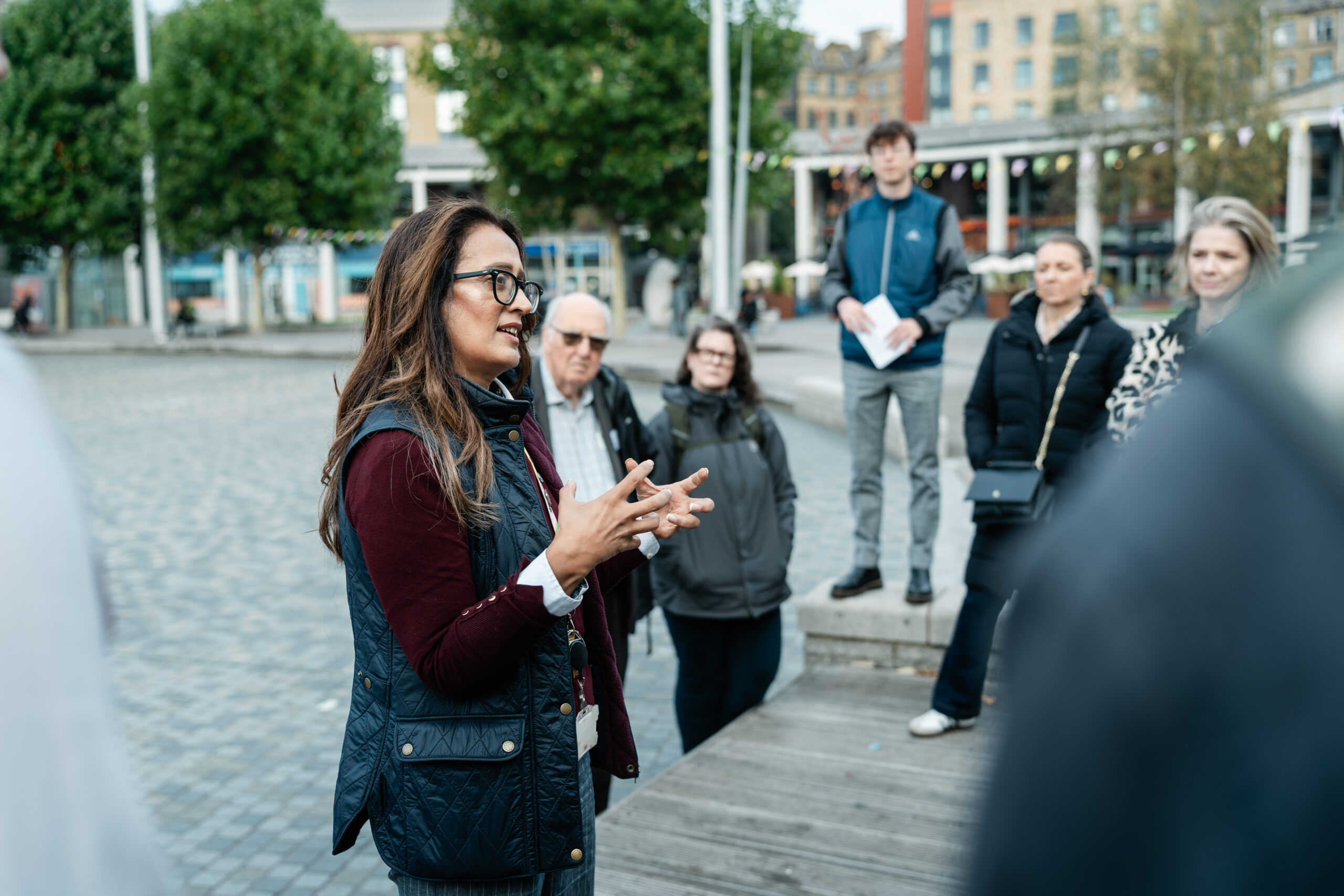
Would you like to take people on tours of your site, project, or local area in 2026? Do you already lead tours for members of the community, or regularly invite funders and decision makers on site to explore prospective projects?
Trails and tours are some of the most effective and adaptable tools available to heritage organisations. When done well, they can build community support, introduce new audiences to your work, and help secure investment from funders and partners. At their best, they transform heritage from something people observe into something they experience, question, and feel connected to.
Making heritage visible, relevant, and shared
Heritage projects like ours often bring together complex, multi-layered histories, or unloved places and long-term ambitions that can be difficult to communicate on paper alone. There are lots of reasons why tours and trails can be vital tools to have in your organisation’s arsenal. For one, tours and trails allow people to encounter heritage in situ: to walk and wheel the spaces, hear the stories, and understand how the past connects to present-day communities.
For local audiences, this can foster a sense of ownership and pride. It can also break down misconceptions about heritage and development, by showing that heritage is not just about preservation, but about people, place, and lived experience. Tours led by staff teams and volunteers can give people opportunities to connect with the people behind the project, and feed into their thinking in all sorts of way. While trails, which are often self-led with the help of a printed or digital guide, can extend this engagement beyond a single moment, encouraging exploration at an individual pace and reaching those who might not attend a formal event.
Supporting organisational goals
At the Heritage Network, we see tours and trails as more than just interpretive tools—they are strategic ones. They can support a wide range of organisational aims, including:
- Building trust and long-term relationships with local communities
- Demonstrating impact and potential to funders, partners, and decision makers
- Testing ideas and narratives during development or restoration phases
- Training staff and volunteers in interpretation, facilitation, and public engagement
Inviting people to see a site for themselves is often far more persuasive than a written proposal. I can confidently bet that you’ve once said to someone, “come and see us, and then you’ll get it”, or that someone has said the same to you. A well-designed tour can communicate vision, need, and opportunity in a way that feels more tangible and compelling.
The skills behind effective and inclusive tours
While tours and trails may appear simple, running them well requires particular knowledge and skills. Questions of audience, accessibility, health and safety, and interpretation all need careful thought. Different groups such as local residents, families, heritage professionals, or funders will each bring different expectations and needs, and you’ll want to communicate different things to them.
At the Heritage Network, we know this well – our team have developed many heritage tours and trails through each of our careers over the years, and we see all the time just how powerful they can be when they are thoughtfully designed. We’re also big advocates of how much confidence and clarity it gives organisations when staff and volunteers are supported to reflect on why they are running tours, who they are for, and what they want people to take away.
Book now: How To Design Heritage Tours and Trails for Your Project
All of the above are reasons why we’re really excited that the Heritage Network is hosting How To: Design Heritage Tours and Trails for Your Project on 3rd March 2026.
This one-hour online workshop will give participants space to reflect on how tours and trails of their site could be developed, or refined, to better achieve their organisation’s goals. The session will be led by tour guide expert and architectural historian Dr Rosamund Lily West, who runs tours for Open City London and brings a broad range of experience.
Rosamund will explore how tours can be adapted for different aims and audiences, alongside essential practical considerations such as accessibility and health and safety. Whether you are thinking about developing tours for the first time or looking to improve an existing offer, whether you’ve been taking part in programmes like Heritage Open Days and Doors Open Days for years, or are preparing to reopen your doors after a major restoration project, this is an opportunity to step back and think strategically about how tours and trails can work for you—and for your communities.
