A community archaeology project has uncovered the remains of a prehistoric settlement beside Crookston Castle in Glasgow, pushing the known history of one of Scotland’s most distinctive urban heritage sites back by thousands of years.
The discovery was made during a three-day geophysical survey carried out last August by volunteers from the Friends of Crookston Castle, working alongside specialist archaeologists from Historic Environment Scotland (HES). It is the first evidence of prehistoric occupation recorded at the site, and is believed to be one of the most significant community archaeology finds in recent years.
Hidden beneath a field just beyond the castle’s moat, the survey revealed the remains of at least five roundhouses, large circular timber buildings characteristic of the Bronze and Iron Ages, alongside a palisaded enclosure that may once have surrounded them. Together, they tell the story of a settled community who lived and farmed this ridge above the River Cart some 2000 or 3000 years ago, long before Glasgow existed.
The find is particularly striking given its location. Crookston, in the south-west of Glasgow, is home to the city’s only surviving medieval castle, already one of its oldest standing buildings. The discovery suggests this hilltop was a place of human significance for millennia before the first stone of the castle was laid.
The survey had not been designed to find prehistoric remains at all. Its primary aim was to answer longstanding questions about the medieval castle including the possible location of a 12th-century chapel and the layout of its outer defences. The prehistoric settlement emerged entirely unexpectedly from the geophysical data, which detects buried features without disturbing the ground.
“This isn’t just a medieval site, it’s now part of a much deeper human story”
Said David McDonald, the Chairperson of the Friends of Crookston Castle. He continued:
“This is a remarkable moment for Crookston and for Glasgow. We knew this castle had more stories to tell but none of us expected to find evidence of an entire prehistoric community living here. In just three days, our volunteers helped uncover something lost for thousands of years and that will help rewrite the early history of this place.”
The survey, funded by the Castle Studies Trust, also shed new light on the castle itself. Within the area enclosed by the medieval moat, surveys identified structural remains consistent with a Chapel built by Robert Croc around 1180 as well as evidence of walls, possible entrances, and internal buildings within the castle’s defended enclosure.
Coal mining activity, possibly dating as far back as the medieval period, was also identified, a discovery the team believes may finally explain the longstanding local legend of a secret tunnel running from the castle to Paisley Abbey. No tunnel was found, but evidence of old mine workings beneath the field could plausibly have given rise to the story over centuries.
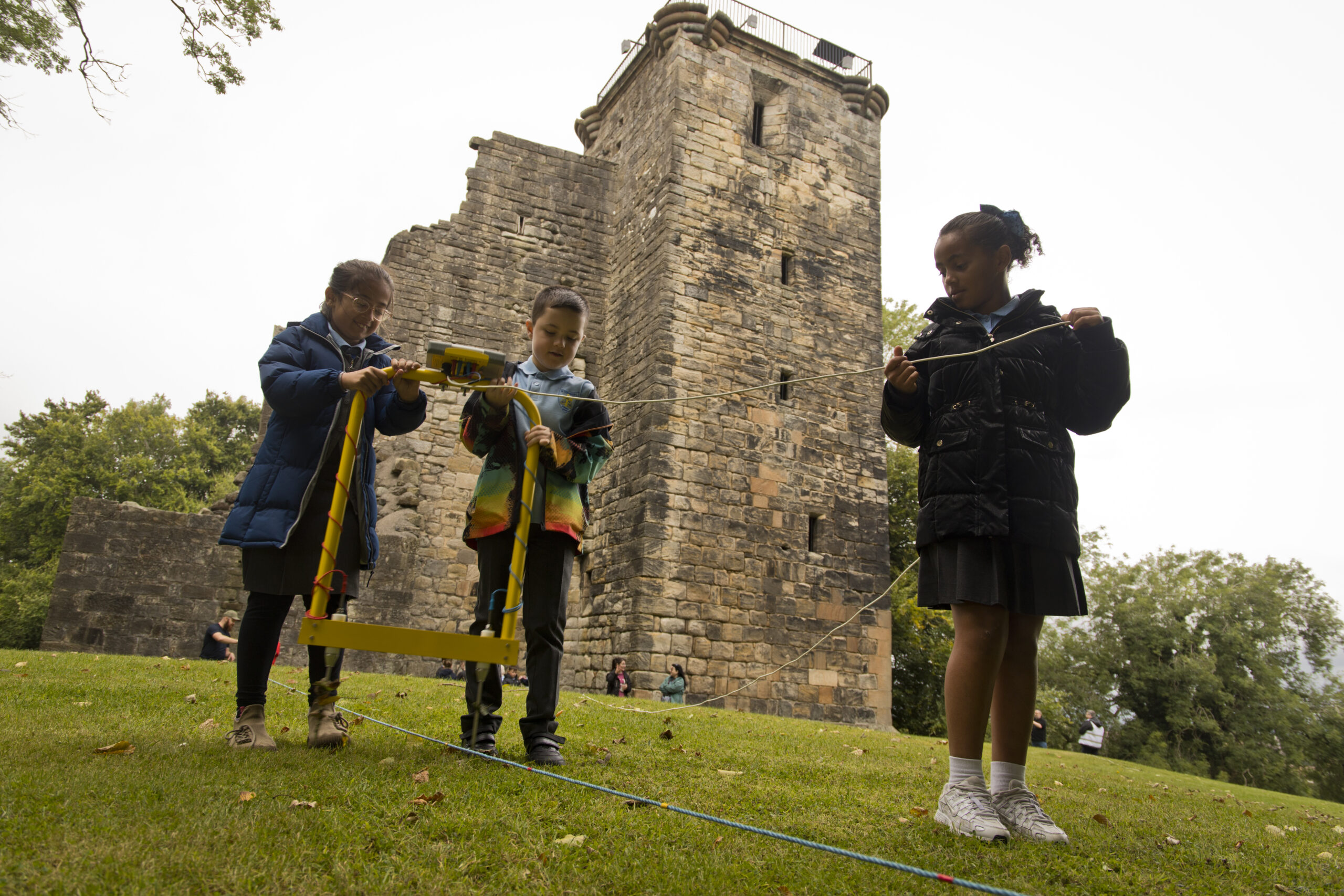
Pupils from five local schools, Crookston Castle Primary School, Rosshall Academy, St Marnock’s Primary School, St Monica’s Primary School and Castlehead High School took a hands-on part in the survey using specialist equipment and putting questions directly to the archaeologists.
During the survey the Lord Provost of Glasgow Councillor Jaqueline McLaren joined the children in scanning the grounds as part of the celebration of Glasgow 850th anniversary. On reviewing the survey findings the Lord Provost said:
“This discovery opens up an entirely new chapter in Glasgow’s story. It gives us a chance to explore our city’s past and better understand the communities who lived here long before the Glasgow we know today began to take shape. It is particularly inspiring to see this work led by a local community group. I want to congratulate the Friends of Crookston Castle and their volunteers for bringing new life and knowledge to one of our most important historic places.”
Further investigation including potentially targeted excavation is now being explored. If confirmed and dated through excavation, the prehistoric settlement could provide a rare opportunity to learn about some of the earliest known inhabitants of what is now Glasgow.
The results have been formally recorded by experts from Historic Environment Scotland and are publicly accessible online.
Image credit: Friends of Crookston Castle
